We build the second kind.
It Started with a Feeling
Not a business plan. Not a market gap. A feeling.
We’d spent years walking into homes — our own, and the homes of people we loved — and feeling like something was missing. Beautiful homes that didn’t feel like homes. Spaces with potential that hadn’t been fully realised. Rooms that were missing the softness, the texture, the thoughtful finishing touches that transform a house into a sanctuary.
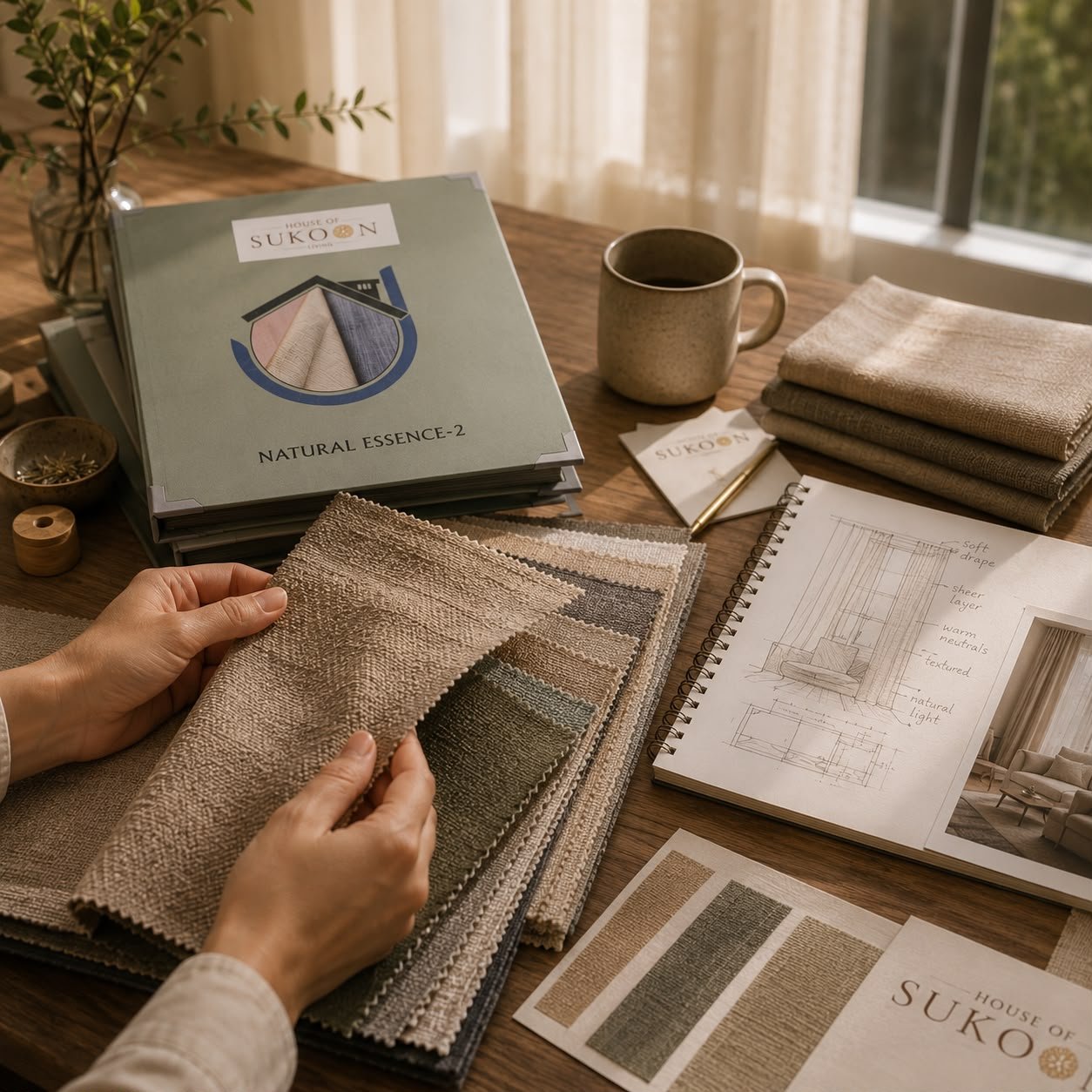
We wanted beautiful curtains for our home. Floor-length linen that draped the way it does in the interiors magazines. Properly lined, properly made, properly fitted. And we got quotes that made us laugh — then made us quietly furious. Fabrics that felt genuinely luxurious, blinds that fitted perfectly — we kept running into the same wall.
The good stuff was expensive. And we mean realllllyyy expensive.
Not because it had to be. But because that’s how the industry had always worked. Luxury was rationed. Quality was gated behind price points that excluded most people. And the cheaper alternatives? They looked cheap. They felt cheap. They lasted about as long as you’d expect.
We thought: this is the problem. And we decided to fix it.
Where We Come From
We come from India — and that matters more than it might first seem.
India is one of the world’s great textile nations. It has been for thousands of years. The subcontinent gave the world muslin so fine it was described as woven air. It gave the world a tradition of craft, colour, and textile artistry that is genuinely unmatched anywhere on earth.
That tradition is very much alive. India today is one of the largest textile manufacturing hubs in the world — producing linens, cottons, silks, velvets, jacquards, and woven fabrics of extraordinary quality.
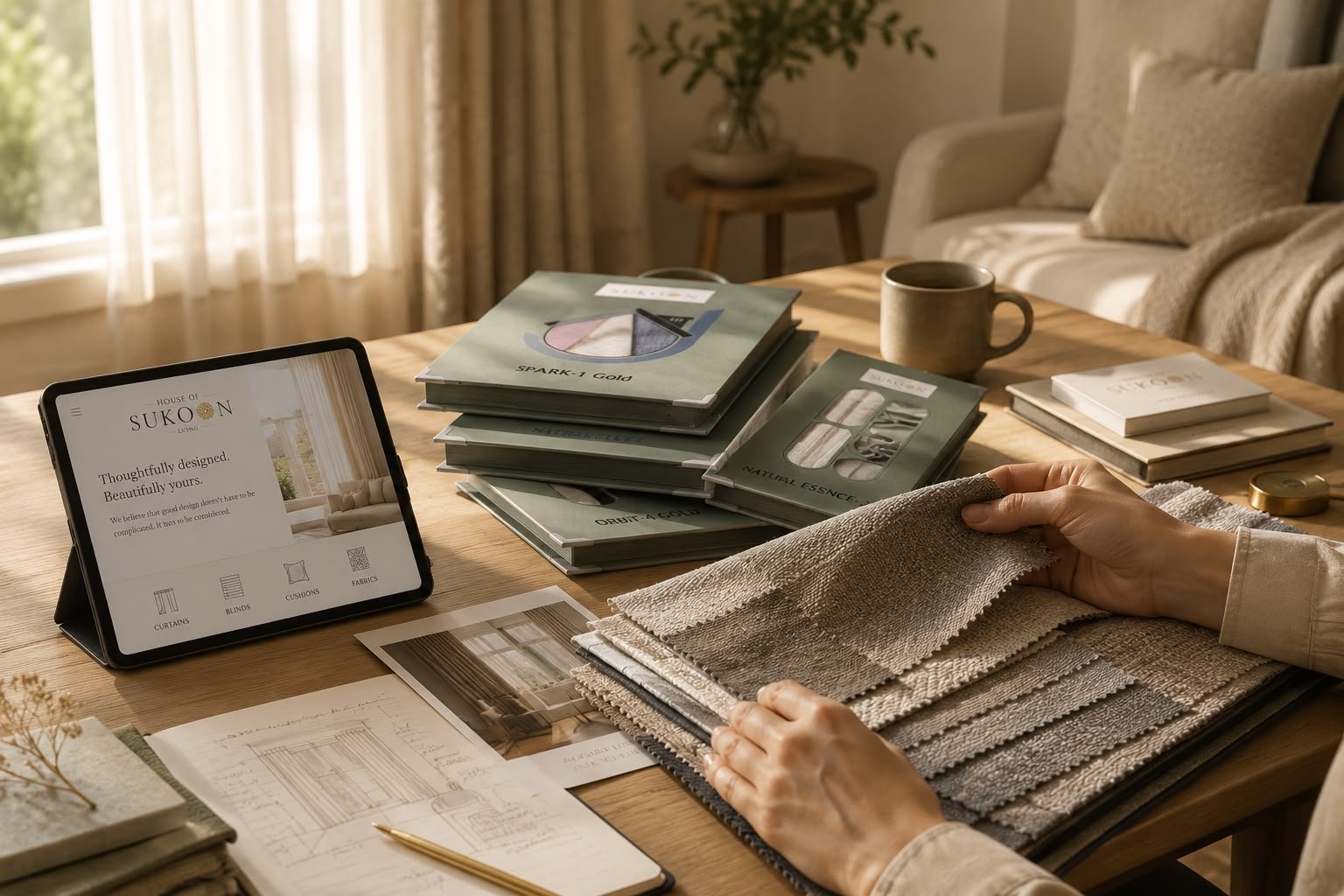
We have relationships with makers and mills in India that most retailers simply don’t have access to. We know where the best fabrics come from, how they’re made and we want to bring Indian textile expertise — genuine, centuries-deep expertise — to Australian homes, without the layers of margin that make luxury feel like a luxury.
What We Believe
We believe that good design doesn’t have to be complicated. It has to be considered.
It means choosing the right fabric not just for how it looks in a showroom, but for how it drapes in morning light. It means understanding that a bedroom needs different softness than a study. That a family living room and a formal lounge are not the same kind of space, and shouldn’t be treated as such.
It means listening — really listening — before we ever make a single recommendation.
That philosophy is woven into every curtain we make, every blind we fit, and every cushion we help you choose.
Our People
House of Sukoon Living is a boutique team. We’re not a large chain or a big-box retailer. We’re a small, dedicated group of people who genuinely love what we do — and it shows.
Every consultation is personal. Every measurement is precise. Every installation is treated as if it’s our own home we’re dressing. We take pride in the details that most people never even notice — because those are the details that make all the difference.
What Sukoon Really Means
Not a business plan. Not a market gap. A feeling.
We’d spent years walking into homes — our own, and the homes of people we loved — and feeling like something was missing. Beautiful homes that didn’t feel like homes. Spaces with potential that hadn’t been fully realised. Rooms that were missing the softness, the texture, the thoughtful finishing touches that transform a house into a sanctuary.
We wanted beautiful curtains for our home. Floor-length linen that draped the way it does in the interiors magazines. Properly lined, properly made, properly fitted. And we got quotes that made us laugh — then made us quietly furious. Fabrics that felt genuinely luxurious, blinds that fitted perfectly — we kept running into the same wall.
The good stuff was expensive. And we mean realllllyyy expensive.
Not because it had to be. But because that’s how the industry had always worked. Luxury was rationed. Quality was gated behind price points that excluded most people. And the cheaper alternatives? They looked cheap. They felt cheap. They lasted about as long as you’d expect.
We thought: this is the problem. And we decided to fix it.